The U.S. Standard railroad gauge (distance between the rails) is 4 feet, 8.5 inches. That’s an exceedingly odd number. Why was that gauge used? Because that’s the way they built them in England, and English expatriates designed the U.S. Railroads. Why did the English build them like that? Because the first rail lines were built by the same people who built the pre-railroad tramways, and that’s the gauge they used. Why did ‘they’ use that gauge then? Because the people who built the tram ways used the same jigs and tools that they had used for building wagons, which used that wheel spacing.
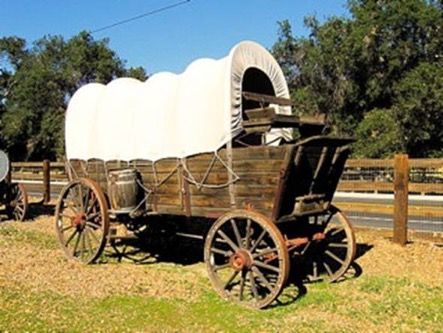
Why did the wagons have that particular odd wheel spacing? Well, if they tried to use any other spacing, the wagon wheels would break on some of the old, long distance roads in England, because that’s the spacing of the wheel ruts.
So, who built those old rutted roads? Imperial Rome built the first long distance roads in Europe (including England) for their legions. Those roads have been used ever since.
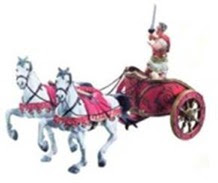
And the ruts in the roads? Roman war chariots formed the initial ruts, which everyone else had to match for fear of destroying their wagon wheels.
Since the chariots were made for Imperial Rome, they were all alike in the matter of wheel spacing. Therefore, the United States standard railroad gauge of 4 feet, 8.5 inches is derived from the original specifications for an Imperial Roman war chariot.
In other words, bureaucracies live forever.
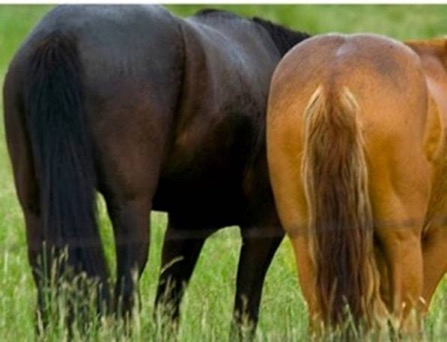
So the next time you are handed a specification, procedure, or process, and wonder, ‘What horse’s ass came up with this’, you may be exactly right. Imperial Roman army chariots were made just wide enough to accommodate the rear ends of two war horses. Now, the twist to the story: When you see a Space Shuttle sitting on its launch pad, you will notice that there are two big booster rockets attached to the sides of the main fuel tank. These are solid rocket boosters, or SRBs. The SRBs are made by Thiokol at their factory in Utah.
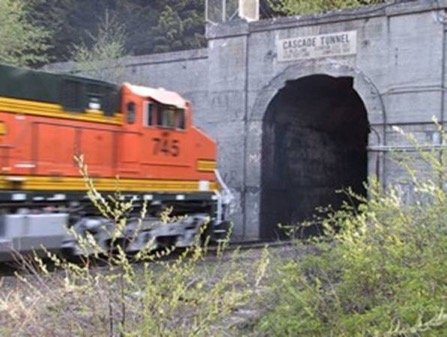
The engineers who designed the SRBs would have preferred to make them a bit larger, but the SRBs had to be shipped by train from the factory to the launch site. The railroad line from the factory happens to run through a tunnel in the mountains and the SRBs had to fit through that tunnel. The tunnel is slightly wider than the railroad track, and the railroad track, as you now know, is about as wide as two horses’ behinds.
So, a major Space Shuttle design feature of what is arguably the world’s most advanced transportation system was determined over two thousand years ago by the width of a horse’s ass.
And you thought being a horse’s ass wasn’t important! Now you know. Horses’ Asses control almost everything. Explains a whole lot of stuff, doesn’t it ?
Do not glance at the end until you have looked at these three photos! Pay close attention to each scene. Colgate has created a very ingenious advertising campaign to promote their dental floss. But… before I explain to you the main detail of these images, I will let you observe them quietly on your own.
Alright……..now that you’ve had time to quietly observe the images…..
In the first photograph, you might have noticed that the woman has six fingers on her left hand.
In the second photograph, a phantom arm is floating behind the man.
In the third photograph, the man has only one ear.
The campaign attained its purpose. It proved that food debris on your teeth draws more attention than any physical defect does.
How well did you do??
You failed the whole thing?
So did I.
So now you know that no matter what physical “defect” you might feel self-conscious about, just stick a chunk of spinach between your front teeth and no one will notice anything else about you!